When Should an Airbag Inflate in my Toyota Sienna?
Frontal airbags are designed to inflate in moderate to severe frontal
or near-frontal crashes to help reduce the potential for severe
injuries mainly to the driver’s or right front passenger’s head and chest.
However, they are only designed to inflate if the impact exceeds a
predetermined deployment threshold. Deployment thresholds
are used to predict how severe a crash is likely to be in time for the
airbags to inflate and help restrain the Toyota Sienna occupants.
Whether the frontal airbags will or should deploy is not based on
how fast your Toyota Sienna is traveling. It depends largely on what you hit,
the direction of the impact, and how quickly your Toyota Sienna slows down.
Frontal airbags may inflate at different crash speeds. For example:
If the Toyota Sienna hits a stationary object, the airbags could inflate at
a different crash speed than if the Toyota Sienna hits a moving object.
If the Toyota Sienna hits an object that deforms, the airbags could inflate
at a different crash speed than if the Toyota Sienna hits an object that
does not deform. If the Toyota Sienna hits a narrow object
(like a pole), the airbags could inflate at a different crash speed
than if the Toyota Sienna hits a wide object (like a wall).
If the Toyota Sienna goes into an object at an angle, the airbags could
inflate at a different crash speed than if the Toyota Sienna goes straight
into the object. Thresholds can also vary with specific Toyota Sienna design.
All of the airbags in the Toyota Sienna will have the word AIRBAG embossed in the trim or on an attached label near the deployment opening.
For frontal airbags, the word
AIRBAG will appear on the middle part of the steering wheel for
the driver and on the instrument
panel for the right front passenger.
With seat-mounted side impact airbags, the word AIRBAG will appear on the side of the
seatback closest to the door.
With roof-rail airbags, the word
AIRBAG will appear along the headliner or trim.
Airbags are designed to supplement
the protection provided by safety
belts. Even though today’s airbags
are also designed to help reduce
the risk of injury from the force of an
inflating bag, all airbags must
inflate very quickly to do their job.
Here are some important things to know about the airbag system:
You can be severely injured or
killed in a crash if you are not
wearing your safety belt — even
if you have airbags. Airbags are
designed to work with safety belts, but do not replace them.
Also, airbags are not designed to
deploy in every Toyota Sienna crash. In some
crashes safety belts are your only
restraint. Wearing your safety belt during a
crash helps reduce your chance
of hitting things inside the Toyota Sienna
or being ejected from it. Airbags
are “supplemental restraints” to
the safety belts. Everyone in your
Toyota Sienna should wear a safety belt
properly — whether or not there is
an airbag for that person.
A frontal Toyota Sienna collision that is not severe enough to need airbag protection will not activate the system. This
does not mean something is wrong with the airbag system.
If you do have a collision in your Toyota Sienna which deploys the airbags, any or all of the following may occur:
The nylon airbag material may sometimes cause abrasions
and/or skin reddening to the driver and front
passenger as the airbags deploy and unfold. The
abrasions are similar to friction rope burns or those
you might get sliding along a carpet or gymnasium
floor. They are not caused by contact with chemicals.
They are not permanent and normally heal quickly.
However, if you haven’t healed significantly within a
few days, or if you have any blistering, see your doctor immediately.
As the airbags deflate you may see some smoke-like
particles. The particles are a normal by-product of the
process that generates the nontoxic gas used for airbag
inflation. These airborne particles may irritate the skin,
eyes, nose, or throat. If you have skin or eye irritation,
rinse the area with cool water. For nose or throat
irritation, move to fresh air. If the irritation continues,
see your doctor. If these particles settle on your
clothing, follow the garment manufacturer’s instructions for cleaning.
It is not advisable to drive your Toyota Sienna after the
airbags have deployed. If you are involved in another
collision, the airbags will not be in place to protect you.
WARNING!
Modifications to any part of the airbag system could cause it to fail
when you need it. You could be injured if the airbag system is not
there to protect you. Do not modify the components or wiring,
including adding any kind of badges or stickers to the steering wheel
hub trim cover or the upper right side of the instrument panel. Do not
modify the front bumper or Toyota Sienna body structure.
Do not attempt to modify any part of your advanced airbag system.
The airbag may inflate accidentally or may not function properly if
modifications are made. Take your Toyota Sienna to an authorized dealer for
any advanced airbag system service. If your seat including your trim
cover and cushion needs to be serviced in any way (including removal
or loosening/tightening of seat attachment bolts), take the Toyota Sienna to
your authorized dealer. Only manufacturer approved seat accessories
may be used. If it is necessary to modify an advanced airbag system
for persons with disabilities, contact your authorized Toyota Sienna dealer.
Do not place or hang any items such as add-on video players on the
right front passenger seat back. The additional weight may cause the
Occupant Classification System to be unable to correctly classify the
right front occupant. This could allow the passenger frontal airbag to
inflate when it is not desired.
You need proper knee impact protection in a collision. Do not mount
or locate any aftermarket equipment on or behind the knee bolsters.
It is dangerous to try to repair any part of the airbag system yourself. Be
sure to tell anyone who works on your Toyota Sienna that it has an airbag system.
Airbags inflate with great force,
faster than the blink of an eye. Anyone who is up against, or very
close to, any airbag when it inflates can be seriously injured or killed.
Do not sit unnecessarily close to the airbag, as you would be if you
were sitting on the edge of your seat or leaning forward. Safety
belts help keep you in position before and during a crash. Always
wear your safety belt, even with airbags. The Toyota Sienna driver should sit as far
back as possible while still maintaining control of the Toyota Sienna.
Occupants should not lean on or sleep against the door or side
windows in seating positions with seat-mounted side impact airbags
and/or roof-rail airbags.
CAUTION
Children who are up against, or
very close to, any airbag when it
inflates can be seriously injured or
killed. Airbags plus lap-shoulder
belts offer protection for adults
and older children, but not for
young children and infants.
Neither the Toyota Sienna’s safety belt
system nor its airbag system is
designed for them. Young children
and infants need the protection
that a child restraint system can
provide. Always secure children
properly in your Toyota Sienna.
Does my Toyota Sienna have Airbags?
.
Saturday, January 1, 2011

Tuesday, December 7, 2010
Spare Tire Carrier Cable Corrosion
Certain 1998 thr 2010 Toyota Sienna's equiped with spare tire may have severe corrosion of spare tire carrier cable.
Toyota Sienna Owner,
Toyota Special Service Campain on Certain Toyota Siennas.
The Condition may occour if the Toyota Sienna is operated in cold climate regions of the United States where road salts are frequently used. Water can splash backwards with high concentrations of road salt and corrode the spare tire carrier assembly.
The Toyota special service campain offers to apply a corrosion resistant compond to the end of the toyota sienna spare tire carrier cable.
How to take advantage of this Toyota Sienna special service campaign. If you believe your vehicle will be operated in cold climates where a high concentration of road salt is frequently used, please contact an authorized Toyota Sienna dealer and schedule an appointment to have the corrosion resistant compound applied to the end of your Toyota Sienna's spare tire carrier cable. The application of the CRC will take approximately 30 minutes.
This special service campaign applies to 1998 through 2010 model year two-wheel drive Toyota Siennas.
toyota sienna spare tire holder cable.
Toyota Sienna Owner,
Toyota Special Service Campain on Certain Toyota Siennas.
The Condition may occour if the Toyota Sienna is operated in cold climate regions of the United States where road salts are frequently used. Water can splash backwards with high concentrations of road salt and corrode the spare tire carrier assembly.
The Toyota special service campain offers to apply a corrosion resistant compond to the end of the toyota sienna spare tire carrier cable.
How to take advantage of this Toyota Sienna special service campaign. If you believe your vehicle will be operated in cold climates where a high concentration of road salt is frequently used, please contact an authorized Toyota Sienna dealer and schedule an appointment to have the corrosion resistant compound applied to the end of your Toyota Sienna's spare tire carrier cable. The application of the CRC will take approximately 30 minutes.
This special service campaign applies to 1998 through 2010 model year two-wheel drive Toyota Siennas.
toyota sienna spare tire holder cable.
Friday, November 26, 2010
My Toyota Sienna in Blizzard Conditions
Toyota Sienna Winter Driving in Blizzard Conditions
You should have some type of winter survival kit and Plan in your Toyota Sienna in case of winter time emergency.
Driving ypur Toyota Sienna on Snow or Ice
Drive carefully when there is snow
or ice between the tires and the road,
creating less traction or grip. Wet ice
can occur at about 32°F (0°C) when
freezing rain begins to fall, resulting
in even less traction. Avoid driving on
wet ice or in freezing rain until roads
can be treated with salt or sand.
Drive with caution, whatever the
condition. Accelerate gently
so traction is not lost. Accelerating
too quickly causes the wheels
to spin and makes the surface under
the tires slick, so there is even
less traction.
Try not to break the fragile traction.
If you accelerate too fast, the drive
wheels will spin and polish the
surface under the tires even more.
The Antilock Brake System (ABS)
improves Toyota Sienna
stability during hard stops on
a slippery roads, but apply the
brakes sooner than when on
dry pavement.
Allow greater following distance on
any slippery road and watch for
slippery spots. Icy patches
can occur on otherwise clear roads
in shaded areas. The surface of
a curve or an overpass can remain
icy when the surrounding roads
are clear. Avoid sudden steering
maneuvers and braking while on ice.
Turn off cruise control, if equipped,
on slippery surfaces.
Blizzard Conditions:
Being stuck in snow can be a serious situation. You should have some type of survival kit in your Toyota Sienna if you Live where blizzard conditions exist. Plan for the worst and hope for the best.
Stay with the
Toyota Sienna unless there is help nearby.
To get help and keep everyone in the Toyota Sienna safe:
Turn on the Hazard Warning Flashers
Tie a red cloth to an outside mirror.
Snow can trap Toyota Sienna engine exhaust
under the Toyota Sienna. This may cause
exhaust gases to get inside.
Toyota Sienna engine exhaust contains carbon
monoxide (CO) which cannot be
seen or smelled. It can cause
unconsciousness and even death.
If the Toyota Sienna is stuck in the snow:
Clear away snow from
around the base of your
Toyota Sienna, especially any that is
blocking the exhaust pipe.
Check again from time to
time to be sure snow does
not collect there.
Open a window about
two inches on the side of the
Toyota Sienna that is away from the
wind to bring in fresh air.
Fully open the air outlets on
or under the instrument panel.
Adjust the Toyota Sienna Climate Control
system to a setting that
circulates the air inside the
Toyota Sienna and set the fan speed
to the highest setting.
Snow can trap exhaust gases
under your Toyota Sienna. This can cause
deadly CO (carbon monoxide) gas
to get inside. CO could overcome
you and kill you. You cannot see it
or smell it, so you might not know it
is in your Toyota Sienna. Clear away snow
from around the base of your
Toyota Sienna, especially any that is
blocking the exhaust
Run the Toyota Sienna engine for short periods
only as needed to keep warm,
but be careful.
To save fuel, run the Toyota Sienna engine for only
short periods as needed to warm
the Toyota Sienna and then shut the Toyota Sienna engine
off and close the window most of
the way to save heat. Repeat
this until help arrives but only when
you feel really uncomfortable
from the cold. Moving about to keep
warm also helps.
If it takes some time for help to
arrive, now and then when you run
the Toyota Sienna engine, push the accelerator
pedal slightly so the Toyota Sienna engine
runs faster than the idle speed. This
keeps the Toyota Sienna battery charged to
restart the Toyota Sienna and to signal for
help with the Toyota Sienna headlamps. Do
this as little as possible to save fuel.
You should have some type of winter survival kit and Plan in your Toyota Sienna in case of winter time emergency.
Driving ypur Toyota Sienna on Snow or Ice
Drive carefully when there is snow
or ice between the tires and the road,
creating less traction or grip. Wet ice
can occur at about 32°F (0°C) when
freezing rain begins to fall, resulting
in even less traction. Avoid driving on
wet ice or in freezing rain until roads
can be treated with salt or sand.
Drive with caution, whatever the
condition. Accelerate gently
so traction is not lost. Accelerating
too quickly causes the wheels
to spin and makes the surface under
the tires slick, so there is even
less traction.
Try not to break the fragile traction.
If you accelerate too fast, the drive
wheels will spin and polish the
surface under the tires even more.
The Antilock Brake System (ABS)
improves Toyota Sienna
stability during hard stops on
a slippery roads, but apply the
brakes sooner than when on
dry pavement.
Allow greater following distance on
any slippery road and watch for
slippery spots. Icy patches
can occur on otherwise clear roads
in shaded areas. The surface of
a curve or an overpass can remain
icy when the surrounding roads
are clear. Avoid sudden steering
maneuvers and braking while on ice.
Turn off cruise control, if equipped,
on slippery surfaces.
Blizzard Conditions:
Being stuck in snow can be a serious situation. You should have some type of survival kit in your Toyota Sienna if you Live where blizzard conditions exist. Plan for the worst and hope for the best.
Stay with the
Toyota Sienna unless there is help nearby.
To get help and keep everyone in the Toyota Sienna safe:
Turn on the Hazard Warning Flashers
Tie a red cloth to an outside mirror.
Snow can trap Toyota Sienna engine exhaust
under the Toyota Sienna. This may cause
exhaust gases to get inside.
Toyota Sienna engine exhaust contains carbon
monoxide (CO) which cannot be
seen or smelled. It can cause
unconsciousness and even death.
If the Toyota Sienna is stuck in the snow:
Clear away snow from
around the base of your
Toyota Sienna, especially any that is
blocking the exhaust pipe.
Check again from time to
time to be sure snow does
not collect there.
Open a window about
two inches on the side of the
Toyota Sienna that is away from the
wind to bring in fresh air.
Fully open the air outlets on
or under the instrument panel.
Adjust the Toyota Sienna Climate Control
system to a setting that
circulates the air inside the
Toyota Sienna and set the fan speed
to the highest setting.
Snow can trap exhaust gases
under your Toyota Sienna. This can cause
deadly CO (carbon monoxide) gas
to get inside. CO could overcome
you and kill you. You cannot see it
or smell it, so you might not know it
is in your Toyota Sienna. Clear away snow
from around the base of your
Toyota Sienna, especially any that is
blocking the exhaust
Run the Toyota Sienna engine for short periods
only as needed to keep warm,
but be careful.
To save fuel, run the Toyota Sienna engine for only
short periods as needed to warm
the Toyota Sienna and then shut the Toyota Sienna engine
off and close the window most of
the way to save heat. Repeat
this until help arrives but only when
you feel really uncomfortable
from the cold. Moving about to keep
warm also helps.
If it takes some time for help to
arrive, now and then when you run
the Toyota Sienna engine, push the accelerator
pedal slightly so the Toyota Sienna engine
runs faster than the idle speed. This
keeps the Toyota Sienna battery charged to
restart the Toyota Sienna and to signal for
help with the Toyota Sienna headlamps. Do
this as little as possible to save fuel.
Sunday, November 14, 2010
Driving My Toyota Sienna in winter
DRIVING My Toyota Sienna ON SLIPPERY SURFACES
Acceleration
Rapid acceleration on snow covered, wet, or other slippery
surfaces may cause the front wheels to pull erratically
to the right or left. This phenomenon occurs when
there is a difference in the surface traction under the front
(driving) wheels, particularly with high output engines.
Rapid acceleration on slippery surfaces is dangerous.
Unequal traction can cause sudden pulling of
the front wheels. You could lose control of the
Toyota Sienna and possibly have an accident. Accelerate
slowly and carefully whenever there is likely to be
poor traction (ice, snow,
Traction
When driving on wet or slushy roads, it is possible for a
wedge of water to build up between the Toyota Sienna tire and road
surface. This is hydroplaning and may cause partial or
complete loss of Toyota Sienna control and stopping ability. To
reduce this possibility, the following precautions should
be observed:
1. Slow down during rainstorms or when roads are slushy.
2. Slow down if road has standing water or puddles.
3. Replace Toyota Sienna tires when tread wear indicators first become visible.
4. Keep Toyota Sienna tires properly inflated.
5. Maintain enough distance between your Toyota Sienna and the Toyota Sienna in front of you to avoid a collision in a sudden stop.
FREEING A STUCK Toyota Sienna
If your Toyota Sienna becomes stuck in mud, sand or snow, it
can often be moved by a rocking motion. Turn your
steering wheel right and left to clear the area around the
front wheels. Then shift back and forth between Reverse
and First gear. Usually the least accelerator pedal pressure
to maintain the rocking motion without spinning the
wheels is most effective.
Fast spinning Toyota Sienna tires can be dangerous. Forces generated
by excessive wheel speeds may cause Toyota Sienna tire damage
or failure. A Toyota Sienna tire could explode and injure
someone. Do not spin your Toyota Sienna’s wheels faster
than 35 mph (55km/h) when you are stuck. And don’t
let anyone near a spinning wheel, no matter what the
speed.
Racing the Toyota Sienna engine or spinning the Toyota Sienna wheels too fast
may lead to Toyota Sienna transaxle overheating and failure. It can
also damage the Toyota Sienna tires. Do not spin the Toyota Sienna wheels above
35 mph (55km/h).
Toyota Sienna Snow tires
Some areas of the country require the use of Toyota Sienna snow tires
during winter. Standard Toyota Sienna tires are of the all season type
and satisfy this requirement as indicated by the M+S
designation on the Toyota Sienna tire side wall.
If you need snow tires, select Toyota Sienna tires equivalent in size and
type to the original equipment Toyota Sienna tires. Use snow tires on Toyota Sienna only
in sets of 4, failure to do so may adversely affect the
safety and handling of your Toyota Sienna.
Snow tires generally have lower speed ratings than what
was originally equipped with your Toyota Sienna and should
not be operated at sustained speeds over 75 mph (120
km/h).
To avoid damage to your Toyota Sienna or Toyota Sienna tires, observe the following precautions:
Because of restricted chain clearance between Toyota Sienna tires and other suspension components, it is important that only chains in good condition are used. Broken chains can cause serious damage. Stop the Toyota Sienna immediately if noise occurs that
could indicate chain breakage. Remove the damaged parts of the chain before further use. Install chains on the front wheels as tightly as
possible and then retighten after driving about 1⁄2 mile (0.8 km). Do not exceed 45 mph (70 km/h). Drive cautiously and avoid severe turns and large bumps, especially with a loaded Toyota Sienna. Do not drive for prolonged period on dry pavement. Observe the Toyota Sienna tire chain manufacturer’s instructions
on the method of installation, operating speed, and conditions for use. Always use the lower suggested operating speed of the chain manufacturer
if different than the speed recommended by the Toyota Sienna manufacture.
Toyota Sienna, snow tires, winter driving
Acceleration
Rapid acceleration on snow covered, wet, or other slippery
surfaces may cause the front wheels to pull erratically
to the right or left. This phenomenon occurs when
there is a difference in the surface traction under the front
(driving) wheels, particularly with high output engines.
Rapid acceleration on slippery surfaces is dangerous.
Unequal traction can cause sudden pulling of
the front wheels. You could lose control of the
Toyota Sienna and possibly have an accident. Accelerate
slowly and carefully whenever there is likely to be
poor traction (ice, snow,
Traction
When driving on wet or slushy roads, it is possible for a
wedge of water to build up between the Toyota Sienna tire and road
surface. This is hydroplaning and may cause partial or
complete loss of Toyota Sienna control and stopping ability. To
reduce this possibility, the following precautions should
be observed:
1. Slow down during rainstorms or when roads are slushy.
2. Slow down if road has standing water or puddles.
3. Replace Toyota Sienna tires when tread wear indicators first become visible.
4. Keep Toyota Sienna tires properly inflated.
5. Maintain enough distance between your Toyota Sienna and the Toyota Sienna in front of you to avoid a collision in a sudden stop.
FREEING A STUCK Toyota Sienna
If your Toyota Sienna becomes stuck in mud, sand or snow, it
can often be moved by a rocking motion. Turn your
steering wheel right and left to clear the area around the
front wheels. Then shift back and forth between Reverse
and First gear. Usually the least accelerator pedal pressure
to maintain the rocking motion without spinning the
wheels is most effective.
Fast spinning Toyota Sienna tires can be dangerous. Forces generated
by excessive wheel speeds may cause Toyota Sienna tire damage
or failure. A Toyota Sienna tire could explode and injure
someone. Do not spin your Toyota Sienna’s wheels faster
than 35 mph (55km/h) when you are stuck. And don’t
let anyone near a spinning wheel, no matter what the
speed.
Racing the Toyota Sienna engine or spinning the Toyota Sienna wheels too fast
may lead to Toyota Sienna transaxle overheating and failure. It can
also damage the Toyota Sienna tires. Do not spin the Toyota Sienna wheels above
35 mph (55km/h).
Toyota Sienna Snow tires
Some areas of the country require the use of Toyota Sienna snow tires
during winter. Standard Toyota Sienna tires are of the all season type
and satisfy this requirement as indicated by the M+S
designation on the Toyota Sienna tire side wall.
If you need snow tires, select Toyota Sienna tires equivalent in size and
type to the original equipment Toyota Sienna tires. Use snow tires on Toyota Sienna only
in sets of 4, failure to do so may adversely affect the
safety and handling of your Toyota Sienna.
Snow tires generally have lower speed ratings than what
was originally equipped with your Toyota Sienna and should
not be operated at sustained speeds over 75 mph (120
km/h).
To avoid damage to your Toyota Sienna or Toyota Sienna tires, observe the following precautions:
Because of restricted chain clearance between Toyota Sienna tires and other suspension components, it is important that only chains in good condition are used. Broken chains can cause serious damage. Stop the Toyota Sienna immediately if noise occurs that
could indicate chain breakage. Remove the damaged parts of the chain before further use. Install chains on the front wheels as tightly as
possible and then retighten after driving about 1⁄2 mile (0.8 km). Do not exceed 45 mph (70 km/h). Drive cautiously and avoid severe turns and large bumps, especially with a loaded Toyota Sienna. Do not drive for prolonged period on dry pavement. Observe the Toyota Sienna tire chain manufacturer’s instructions
on the method of installation, operating speed, and conditions for use. Always use the lower suggested operating speed of the chain manufacturer
if different than the speed recommended by the Toyota Sienna manufacture.
Toyota Sienna, snow tires, winter driving
Saturday, November 6, 2010
My Toyota Sienna Replacement Door Handles
I decided to replace my own Toyota Sienna Rear Side Door Handle (Driver Side).
Broken Toyota Sienna Rear Side Door Handle.

Remove Toyota Sienna Rear inSide Door panel by removing 10mm / Phillips Head Screw from inside Toyota Sienna Rear Side Door cup holder. toyota sienna inside door panels are held on by plastic clip things that can somtimes break. use caustion when popping off your toyota sienna inside door panel.

Remove two (2) 10mm screws holding the broken Toyota Sienna Rear Side Door Handle. i used my awsome craftsmen tool set.

Line up your new Toyota Sienna Rear Side Door Handle, attach door latch cable. Re-use 10mm screws to attach the new Toyota Sienna Rear Side Door Handle.

Then pop the toyota sienna inside door panel back on being careful to line up the toyota sienna inside door panel clips. and as Patrick from Spongebob Squarepants says, "Were Done!"
Here is weere I ordered my Toyota Sienna Rear Side Door Handle.
Hello You sent a payment of $46.18 USD to Auto Parts Network (accounting@usautoparts.com)
Merchant
Auto Parts Network

accounting@usautoparts.com
888-872-8866
Description: Toyota Sienna Rear Side Door Handle
Unit priceQtyAmount
$46.18 USD1$46.18 USD
Subtotal$46.18 USD
Total$46.18 USD
Payment$46.18 USD

Remove Toyota Sienna Rear inSide Door panel by removing 10mm / Phillips Head Screw from inside Toyota Sienna Rear Side Door cup holder. toyota sienna inside door panels are held on by plastic clip things that can somtimes break. use caustion when popping off your toyota sienna inside door panel.

Remove two (2) 10mm screws holding the broken Toyota Sienna Rear Side Door Handle. i used my awsome craftsmen tool set.

Line up your new Toyota Sienna Rear Side Door Handle, attach door latch cable. Re-use 10mm screws to attach the new Toyota Sienna Rear Side Door Handle.
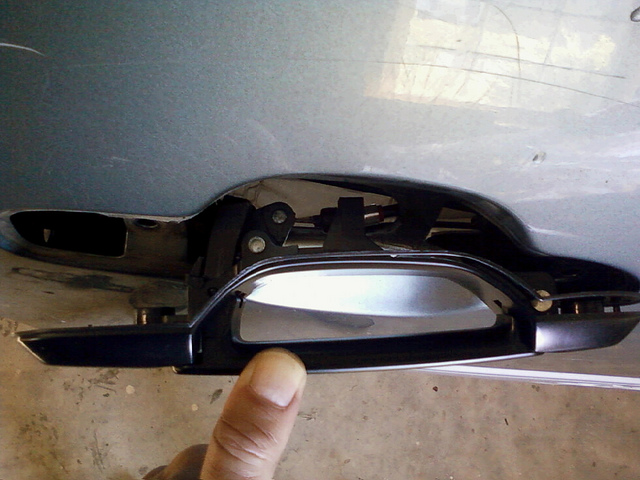
Then pop the toyota sienna inside door panel back on being careful to line up the toyota sienna inside door panel clips. and as Patrick from Spongebob Squarepants says, "Were Done!"
Here is weere I ordered my Toyota Sienna Rear Side Door Handle.
Hello You sent a payment of $46.18 USD to Auto Parts Network (accounting@usautoparts.com)
Merchant
Auto Parts Network

accounting@usautoparts.com
888-872-8866
Description: Toyota Sienna Rear Side Door Handle
Unit priceQtyAmount
$46.18 USD1$46.18 USD
Subtotal$46.18 USD
Total$46.18 USD
Payment$46.18 USD
Payment sent to accounting@usautoparts.com
My next Toyota sienna door replacement handle will be purchased from amazon
I need a toyota sienna inside front door handle and Toyota front drivers side exterior door handle
.
Saturday, October 23, 2010
My Toyota Sienna Window Fogging
My Toyota Sienna air conditioning
Toyota Sienna Window Fogging
Interior fogging on the windshield can be quickly removed
by turning the mode selector to Defrost. The
Defrost/Floor mode can be used to maintain a clear
windshield and provide sufficient heating. If side window
fogging becomes a problem increase blower speed.
Toyota Sienna windows tend to fog on the inside in mild but
rainy or humid weather.
The Toyota Sienna electric Rear Window Defroster Control is
located on the climate control. Press this button to
turn on the rear window defroster. A light above the
button will illuminate when the rear window defroster is
ON. The defroster automatically turns off after approximately
15 minutes of operation for the first push of the
button, and will turn off after approximately 8 minutes
for the second push of the button.
Outside Air Intake
When operating the system, particularly during the winter
months, make sure the air intake, at the right side of
the hood, is free of ice, slush, snow, or other obstructions
such as leaves. Leaves collected in the air-intake plenum
may reduce airflow and plug the plenum water drains.
Toyota Sienna Control Setting Suggestions for Various Weather Conditions
Slight changes in your Toyota Sienna engine speed or power may be noticed
when the compressor is on. This is a normal occurrence
since the compressor will cycle on and off to maintain
comfort and increase fuel economy.
NOTE: If your air conditioning performance seems
lower than expected, check the front of the A/C condenser
for an accumulation of dirt or insects.
Recirculation Control
Air is recirculated inside the Toyota Sienna. You
may choose between Bi-Level and Panel air
outlets while in this mode. Use this mode to
temporarily block out any outside odors,
smoke, or dust and to cool the interior rapidly upon
initial start up in very hot or humid weather.
Toyota Sienna CLIMATE CONTROLS
The Air Conditioning and Heating System is designed to
make you comfortable in all types of weather.
Toyota Sienna Defog Air is directed to the
windshield, floor outlets, and
side window vents. Use this mode
to clear the windows of fog or
moisture and warm the passengers.
Toyota Sienna Defrost Air is directed to
the windshield, with some air
directed to the side window vents.
Use this mode to quickly remove fog
or frost from the windshield.
When defrost is selected, the Toyota Sienna air
conditioning turns on automatically to
improve defrosting performance. In
this mode the air conditioning cannot
be turned off and the recirculation
mode cannot be turned on.

Toyota Sienna Window Fogging
Interior fogging on the windshield can be quickly removed
by turning the mode selector to Defrost. The
Defrost/Floor mode can be used to maintain a clear
windshield and provide sufficient heating. If side window
fogging becomes a problem increase blower speed.
Toyota Sienna windows tend to fog on the inside in mild but
rainy or humid weather.
The Toyota Sienna electric Rear Window Defroster Control is
located on the climate control. Press this button to
turn on the rear window defroster. A light above the
button will illuminate when the rear window defroster is
ON. The defroster automatically turns off after approximately
15 minutes of operation for the first push of the
button, and will turn off after approximately 8 minutes
for the second push of the button.
Outside Air Intake
When operating the system, particularly during the winter
months, make sure the air intake, at the right side of
the hood, is free of ice, slush, snow, or other obstructions
such as leaves. Leaves collected in the air-intake plenum
may reduce airflow and plug the plenum water drains.
Toyota Sienna Control Setting Suggestions for Various Weather Conditions
Slight changes in your Toyota Sienna engine speed or power may be noticed
when the compressor is on. This is a normal occurrence
since the compressor will cycle on and off to maintain
comfort and increase fuel economy.
NOTE: If your air conditioning performance seems
lower than expected, check the front of the A/C condenser
for an accumulation of dirt or insects.
Recirculation Control
Air is recirculated inside the Toyota Sienna. You
may choose between Bi-Level and Panel air
outlets while in this mode. Use this mode to
temporarily block out any outside odors,
smoke, or dust and to cool the interior rapidly upon
initial start up in very hot or humid weather.
Toyota Sienna CLIMATE CONTROLS
The Air Conditioning and Heating System is designed to
make you comfortable in all types of weather.
Toyota Sienna Defog Air is directed to the
windshield, floor outlets, and
side window vents. Use this mode
to clear the windows of fog or
moisture and warm the passengers.
Toyota Sienna Defrost Air is directed to
the windshield, with some air
directed to the side window vents.
Use this mode to quickly remove fog
or frost from the windshield.
When defrost is selected, the Toyota Sienna air
conditioning turns on automatically to
improve defrosting performance. In
this mode the air conditioning cannot
be turned off and the recirculation
mode cannot be turned on.

Saturday, October 9, 2010
Your Toyota Sienna Safety Belts
Questions and Answers About your Toyota Sienna Safety Belts
Q: Will I be trapped in my Toyota Sienna after a crash if I am wearing a
safety belt?
A: You could be — whether you are wearing a safety belt or not. But
your chance of being conscious
during and after an accident, so you can unbuckle and get out, is
much greater if you are belted.
And you can unbuckle a safety belt, even if you are upside down.
Q: If my Toyota Sienna has airbags, why should I have to wear safety belts?
A: Airbags are supplemental systems only; so they work with
safety belts—not instead of them. Whether or not an airbag is provided, all occupants still have
to buckle up to get the most
protection. That is true not only in frontal collisions, but especially in
side and other collisions.
Q: If I am a good driver, and I never drive far from home,
why should I wear safety belts?
A: You may be an excellent driver, but if you are in a crash—even
one that is not your fault—you and your passenger(s) can be
hurt. Being a good driver does not
protect you from things beyond your control, such as bad drivers. Most Toyota Sienna accidents occur within
25 miles (40 km) of home. And
the greatest number of serious injuries and deaths occur at
speeds of less than 40 mph (65 km/h).
Safety belts are for everyone.
OCCUPANT RESTRAINTS
Some of the most important safety features in your
Toyota Sienna are the restraint systems:
Three-point lap and shoulder belts for all seating positions
Pretensioning and load-limiting retractors for the front seat belts
Advanced multistage driver and new active-vent front passenger airbags
An energy-absorbing steering column and steering wheel
Knee Bolsters/Blockers for front seat occupants Front seat belt retractors incorporate pretensioners to
enhance occupant protection by managing occupant If you will a feature also can be used to
hold infant and child restraint systems.
In a collision, you and your passengers can suffer
much greater injuries if you are not properly buckled up. You can strike the interior of your Toyota Sienna or other
passengers, or you can be thrown out of the vehicle. Always be sure you and others in your Toyota Sienna are
buckled up properly.
Toyota Sienna Lap/Shoulder Belt Operating Instructions
1. Enter the vehicle and close the door. Sit back and adjust the seat.
2. The seat belt latch plate is near the seatback of the
front seats and next to your arm in the rear seats. Grasp
the latch plate and pull out the belt. Slide the latch plate up the webbing as far as necessary to allow the belt to go
around your lap.
3. When the belt is long enough to fit, insert the latch plate into the buckle until you hear a “click”.
4. Position the lap belt across your thighs, below your abdomen. To remove slack in the lap belt portion, pull up
on the shoulder belt. To loosen the lap belt if it is too tight,
tilt the latch plate and pull on the lap belt.

A snug belt reduces the risk of sliding under the belt in a collision.
A belt that is buckled into the wrong buckle will
not protect you properly. The lap portion could ride too high on your body, possibly causing internal
injuries. Always buckle your belt into the buckle nearest you.
A belt that is too loose will not protect you as well. In a sudden stop you could move too far forward,
increasing the possibility of injury. Wear your seat belt snugly.
It is extremely dangerous to ride in a Toyota Sienna cargo area, inside or outside
of a vehicle. In a collision, people riding in these areas are more likely to be seriously injured or
killed. Do not allow people to ride in any area of your vehicle that is
not equipped with seats and safety belts. Be sure everyone in
your vehicle is in a seat and using a safety belt properly.
Q: Will I be trapped in my Toyota Sienna after a crash if I am wearing a
safety belt?
A: You could be — whether you are wearing a safety belt or not. But
your chance of being conscious
during and after an accident, so you can unbuckle and get out, is
much greater if you are belted.
And you can unbuckle a safety belt, even if you are upside down.
Q: If my Toyota Sienna has airbags, why should I have to wear safety belts?
A: Airbags are supplemental systems only; so they work with
safety belts—not instead of them. Whether or not an airbag is provided, all occupants still have
to buckle up to get the most
protection. That is true not only in frontal collisions, but especially in
side and other collisions.
Q: If I am a good driver, and I never drive far from home,
why should I wear safety belts?
A: You may be an excellent driver, but if you are in a crash—even
one that is not your fault—you and your passenger(s) can be
hurt. Being a good driver does not
protect you from things beyond your control, such as bad drivers. Most Toyota Sienna accidents occur within
25 miles (40 km) of home. And
the greatest number of serious injuries and deaths occur at
speeds of less than 40 mph (65 km/h).
Safety belts are for everyone.
OCCUPANT RESTRAINTS
Some of the most important safety features in your
Toyota Sienna are the restraint systems:
Three-point lap and shoulder belts for all seating positions
Pretensioning and load-limiting retractors for the front seat belts
Advanced multistage driver and new active-vent front passenger airbags
An energy-absorbing steering column and steering wheel
Knee Bolsters/Blockers for front seat occupants Front seat belt retractors incorporate pretensioners to
enhance occupant protection by managing occupant If you will a feature also can be used to
hold infant and child restraint systems.
In a collision, you and your passengers can suffer
much greater injuries if you are not properly buckled up. You can strike the interior of your Toyota Sienna or other
passengers, or you can be thrown out of the vehicle. Always be sure you and others in your Toyota Sienna are
buckled up properly.
Toyota Sienna Lap/Shoulder Belt Operating Instructions
1. Enter the vehicle and close the door. Sit back and adjust the seat.
2. The seat belt latch plate is near the seatback of the
front seats and next to your arm in the rear seats. Grasp
the latch plate and pull out the belt. Slide the latch plate up the webbing as far as necessary to allow the belt to go
around your lap.
3. When the belt is long enough to fit, insert the latch plate into the buckle until you hear a “click”.
4. Position the lap belt across your thighs, below your abdomen. To remove slack in the lap belt portion, pull up
on the shoulder belt. To loosen the lap belt if it is too tight,
tilt the latch plate and pull on the lap belt.

A snug belt reduces the risk of sliding under the belt in a collision.
A belt that is buckled into the wrong buckle will
not protect you properly. The lap portion could ride too high on your body, possibly causing internal
injuries. Always buckle your belt into the buckle nearest you.
A belt that is too loose will not protect you as well. In a sudden stop you could move too far forward,
increasing the possibility of injury. Wear your seat belt snugly.
It is extremely dangerous to ride in a Toyota Sienna cargo area, inside or outside
of a vehicle. In a collision, people riding in these areas are more likely to be seriously injured or
killed. Do not allow people to ride in any area of your vehicle that is
not equipped with seats and safety belts. Be sure everyone in
your vehicle is in a seat and using a safety belt properly.
Subscribe to:
Posts (Atom)